
Avian Influenza Virus (AIV) is a highly contagious viral infection that primarily affects birds but can sometimes infect humans and other animals. The H5 subtype, particularly H5N1, is known for its high pathogenicity and potential to cause significant outbreaks in both domestic and wild bird populations. Early detection of H5 AIV strains is crucial for controlling the spread of the virus, mitigating economic losses, and reducing the risk of zoonotic transmission (CDC, WHO).
H5 Antigen Rapid Tests are essential tools in the surveillance, management, and control of avian influenza. These tests provide a fast, accurate, and on-site method for detecting the presence of H5 antigens, enabling poultry farmers, veterinarians, and regulatory bodies to take immediate action in preventing the spread of the virus (USDA APHIS).
The Importance of Rapid Testing in Managing H5 AIV Outbreaks
The H5 subtype of Avian Influenza is particularly dangerous due to its high virulence and ability to rapidly spread across bird populations. Infected birds can shed large quantities of the virus through respiratory secretions, feces, and contaminated surfaces. Therefore, early and rapid detection is key to minimizing transmission and initiating control measures such as culling, quarantine, and movement restrictions (NIH, NIAID).
Rapid tests for detecting H5 AIV antigens offer several benefits, including:
- Quick Results: Results are available within 10-15 minutes, allowing for immediate decision-making (FDA).
- On-Site Testing: Tests can be performed in the field, eliminating the need for laboratory facilities, which is crucial during an outbreak (CDC Health).
- Highly Specific and Sensitive: These tests are designed to specifically detect the H5 antigen, ensuring reliable identification of infected birds (WHO Research).
How Avian Influenza H5 Antigen Rapid Tests Work
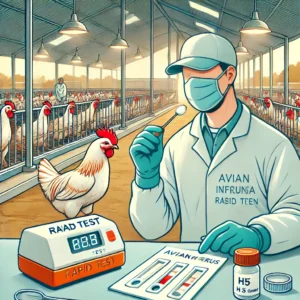
The AIV H5 Antigen Rapid Test uses immunochromatography to detect the presence of H5 antigens in poultry samples, typically collected via cloacal or tracheal swabs. The procedure involves the following steps:
- Sample Collection: A swab is taken from the trachea or cloaca of the bird, where viral replication occurs. Infected birds will shed large amounts of the virus in these areas (NIH NCBI).
- Application: The sample is mixed with a buffer solution and added to the test cassette.
- Detection: If H5 antigens are present in the sample, they bind to specific antibodies on the test strip, forming a visible line to indicate a positive result (PubMed).
- Interpretation: A positive line indicates the presence of the H5 antigen, while a control line ensures the test is functioning correctly (FDA Animal Health).

Applications in Poultry Farming and Disease Control
The use of H5 Antigen Rapid Tests has become an essential part of disease control and management strategies in poultry farming. Key applications include:
- Surveillance Programs: Regular testing of poultry populations, particularly in regions where avian influenza is endemic, helps in early detection of H5 outbreaks, minimizing the spread of the virus (USDA Veterinary).
- Pre-Movement Testing: Birds being transported for sale, slaughter, or movement between farms can be tested to ensure they are free from the virus, reducing the risk of spreading the infection (CDC Health).
- Quarantine and Culling: Rapid identification of infected birds allows for immediate quarantine measures or culling in extreme cases, thus preventing further spread to unaffected populations (NIAID Research).
Regulatory and Public Health Implications
Government agencies such as the USDA Animal and Plant Health Inspection Service (APHIS) and the World Organisation for Animal Health (OIE) recommend the use of rapid antigen testing for monitoring avian influenza in high-risk regions. By identifying H5 AIV early, farmers and veterinarians can implement biosecurity measures to control outbreaks and protect the health of both birds and humans (USDA Research).
Avian influenza viruses, including H5N1, have zoonotic potential, meaning they can be transmitted to humans, particularly those in close contact with infected birds. Rapid detection of the virus in poultry is therefore critical for preventing potential zoonotic transmission and reducing the risk of a public health emergency (CDC, WHO).
Advantages of H5 Antigen Rapid Tests
- Speed: Results within minutes allow for immediate action, which is critical in controlling fast-spreading viruses like H5N1 (NIH NCBI).
- Field Applicability: Tests can be performed directly on farms or in markets without the need for specialized laboratory equipment (CDC Pets).
- Cost-Effective: These rapid tests are affordable and practical, making them accessible for large-scale testing during outbreaks (USDA APHIS).
- Ease of Use: The test requires minimal training, allowing farmers and field veterinarians to quickly conduct the testing themselves (NIAID Influenza).
Future Directions and Research
As avian influenza continues to pose a significant risk to global poultry production and public health, research is ongoing to improve the sensitivity, specificity, and usability of H5 antigen rapid tests. New innovations, such as multiplex tests that can simultaneously detect multiple AIV subtypes, are being developed to enhance the surveillance and management of avian influenza outbreaks (NIH Research).
Moreover, rapid tests may be adapted to include screening for highly pathogenic strains, ensuring that farmers and health officials can differentiate between low and high-risk viruses, enabling more tailored responses to outbreaks (FDA Research).
Conclusion
The Avian Influenza Virus (AIV) H5 Antigen Rapid Test is an essential tool for monitoring, controlling, and preventing the spread of H5 subtype avian influenza in poultry populations. By providing quick and reliable results, these tests allow for immediate action in managing outbreaks, protecting both animal health and public safety (CDC Avian Flu).
As avian influenza remains a global concern, the continued use and development of rapid testing technologies will be key to mitigating the impact of future outbreaks. By enhancing surveillance and response strategies, rapid antigen testing helps safeguard poultry industries and reduces the risk of avian influenza spreading to humans (NIH NIAID).